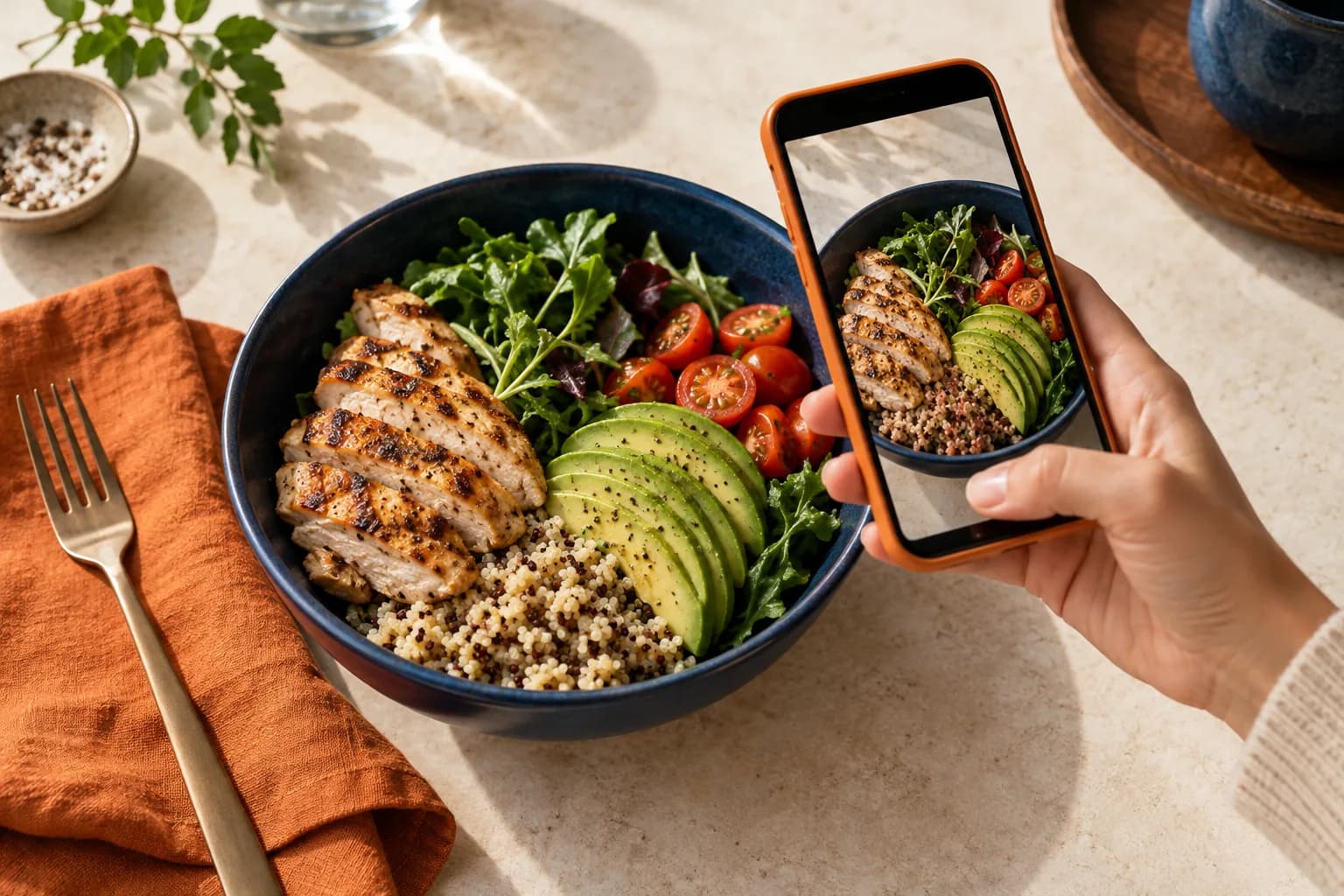
AI food logging turns a sentence or a photo into a draft entry: foods, portions, and an estimated calorie and macro split. The speed is the feature. The draft is not the diary.
Models miss hidden ingredients, confuse similar dishes, and underestimate oils and sauces. That is why a review step matters more than a prettier confidence score. Correcting one portion is still faster than searching a database from scratch.
Barcode lookup remains the better path for packaged foods with a label. AI is most useful for mixed plates, home cooking, and meals you would otherwise skip logging because typing felt too slow.
Treat the weekly total as the object of trust, not any single photo. If three dinners were estimated and one was weighed, the trend can still tell you whether intake is drifting.
Calora keeps AI estimates editable and pairs them with an in-app coach for questions — not for automatic decisions. You confirm the entry. The model does not get the last word.
Keep reading
Why Calorie Tracking Matters
Awareness beats perfection. A simple daily log shows where energy actually goes — and why weekend habits quietly undo weekday intentions.
Read article →
Intermittent Fasting: What the Evidence Says
Time-restricted eating can help some people eat less. It is not a metabolic miracle — and it is a poor fit when it collides with training, medication, or sleep.
Read article →
Macro Calculation Guide
Start from energy needs, set protein for the body you are training, then split the rest between carbs and fat in a way you can actually eat.
Read article →